

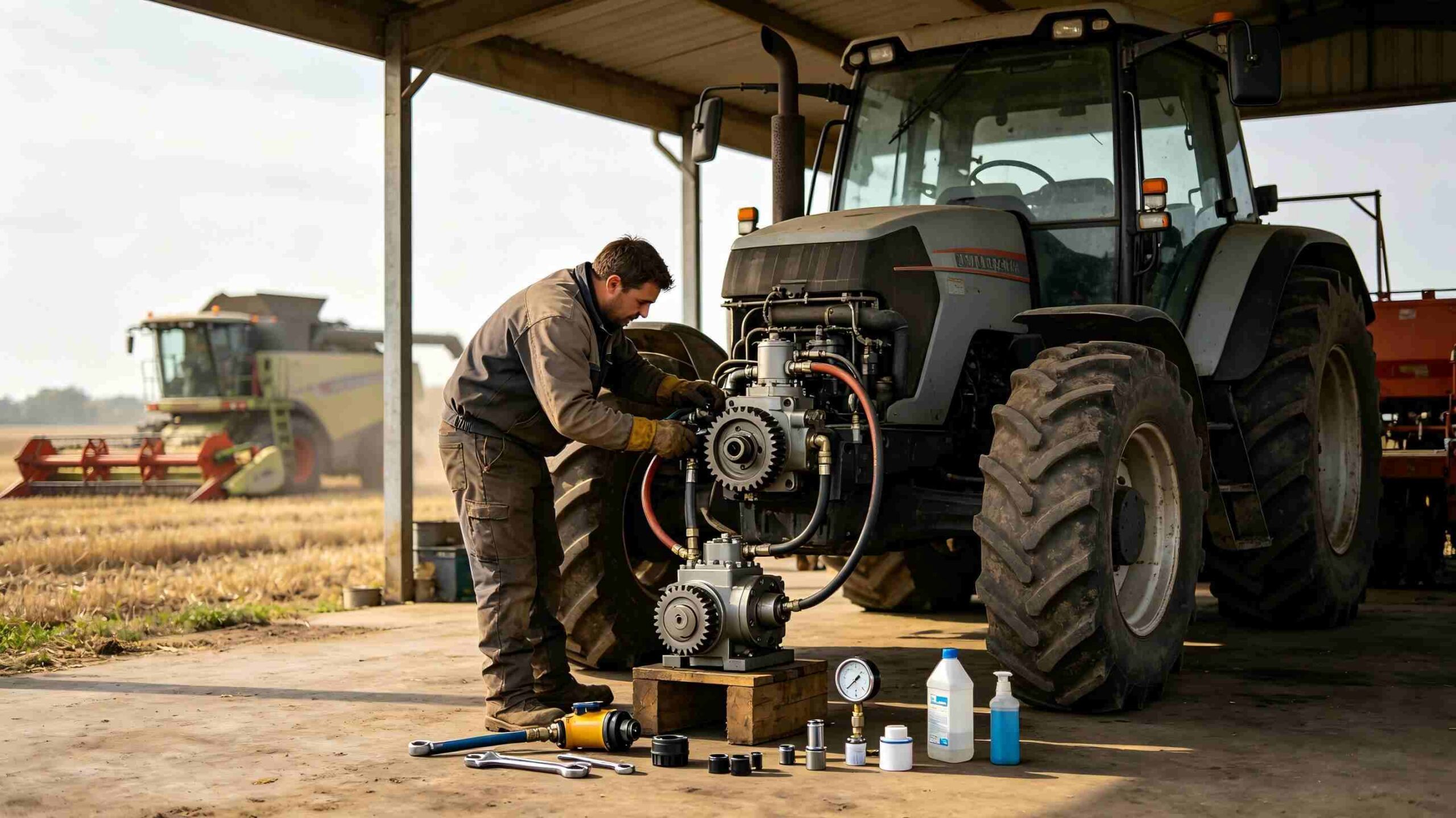
Many farmers and equipment operators immediately buy a brand-new agricultural hydraulic gear pump once they notice insufficient oil supply or low pressure on tractors and harvesters. New tractor hydraulic gear pumps cost a lot, and unexpected downtime during planting or harvest seasons leads to heavy losses.
In fact, most flow failures stem from partial wear on internal parts instead of total pump damage. With targeted low-cost repairs, you can fix internal leakage and flow loss of hydraulic gear pumps without purchasing a full replacement.
Long-term heavy loads wear key components including drive shafts, bushings, pump housings, covers, gear sets and valve seats. After disassembly and wear inspection, corresponding restoration methods can restore the pump’s original flow and pressure performance and cut your parts budget drastically.
1. Repair Worn Drive Shafts & Bushings (Top Cause of Low Flow)
Worn shafts and bushings create excessive clearance, which drastically reduces oil intake and delivery — the main culprit behind unstable flow on harvester hydraulic gear pumps.
- Minor wear: Press out old bushings and install standard new ones to restore normal fitting clearance.
- Severe wear: Replace all bushings, then hard chrome or build up the drive shaft to increase its diameter, followed by precision grinding back to standard size for proper bushing matching.
2. Complete Pump Housing Restoration (Cracks, Bore Wear, Inner Cavity & Valve Seats)
Cracks, worn shaft bores, scored inner cavities and leaking pressure-limiting valves all cause pressure drops.
- Crack repair: Weld cracks with 508 nickel-copper welding rods. Welds must be pore-free, and flatness error of the housing cover joint surface shall not exceed 0.05 mm.
- Worn drive/driven shaft bores: Ream to remove wear marks, then fit oversized custom bushings matching the reamed bore size.
- Scored inner cavity: Bore out the cavity and press in cast iron or steel sleeves. Finish-machine the sleeve to standard dimensions and grind flush with the housing mating surface.
- Pressure-limiting valve seat repair:
Ball valve seats: Tap a steel ball lightly against the seat to achieve full sealing. Ream deep wear marks first before lapping.
Plunger valve seats: Grind with fine valve lapping compound until the seal is tight.
3. Pump Cover Repair to Eliminate End Face Leakage & Pressure Loss
Worn mating surfaces and bushing holes on covers widen end clearance, triggering oil seepage and insufficient pressure in gear pumps.
- Light surface wear: Hand-lap the cover flat with valve lapping compound on thick glass or a flat platform to erase scratches.
- Wear depth over 0.1 mm: Turn the surface on a lathe first, then fine-lap for flatness.
- Worn bushing holes on covers: Use the same reaming and oversized bushing fitting method as housing bores.
4. Budget-Friendly Gear Restoration Tips
Gear wear mostly occurs on one side of the tooth profile, while end faces and tooth crests remain barely damaged. There is no need to replace the entire dual hydraulic gear pump assembly.
- Single-sided tooth wear: Flip the gear 180 degrees to use the unworn tooth surfaces and double service life.
- Slightly scored end faces: Grind gear end faces flat, then lap the housing mating surface to maintain factory-standard end clearance.
- Replace gears entirely if deep scoring or broken teeth appear, and match them with agricultural hydraulic gear pumps of the correct displacement.
Maintenance Tips After Repair to Extend Pump Lifespan
- Replace all sealing components during repair; low-quality oil seals easily trigger repeated leakage and internal leakage.
- Rotate the pump shaft manually post-repair — install only if no jamming or abnormal noise occurs.
- Install high-precision hydraulic filter cartridges regularly; contaminated oil is the primary cause of recurring gear pump wear.
- Avoid sustained deadhead pressure and system overloading to reduce abrasion on gears and bushings.
- Troubleshoot worn parts immediately when flow weakens or equipment moves sluggishly, instead of rushing to buy high-flow hydraulic gear pumps blindly.
Conclusion
Most hydraulic gear pump malfunctions only come from partial component wear. Master these repair techniques for shafts, bushings, housings, covers and gears to avoid costly brand-new high-pressure agricultural hydraulic gear pump purchases. Proper restoration guarantees stable operation of tractors and harvesters and prevents costly downtime during busy farming seasons. Routine oil filtration and periodic inspections minimize component wear and greatly extend your pump’s service life.
Embedded Long-Tail Keywords
agricultural hydraulic gear pump, tractor hydraulic gear pump, harvester hydraulic gear pump, dual hydraulic gear pump, farm-specific hydraulic gear pump, high-pressure agricultural hydraulic gear pump, hydraulic gear pump internal leakage low flow, gear pump oil leakage insufficient pressure, hydraulic gear pump insufficient oil supply, high-flow hydraulic gear pump